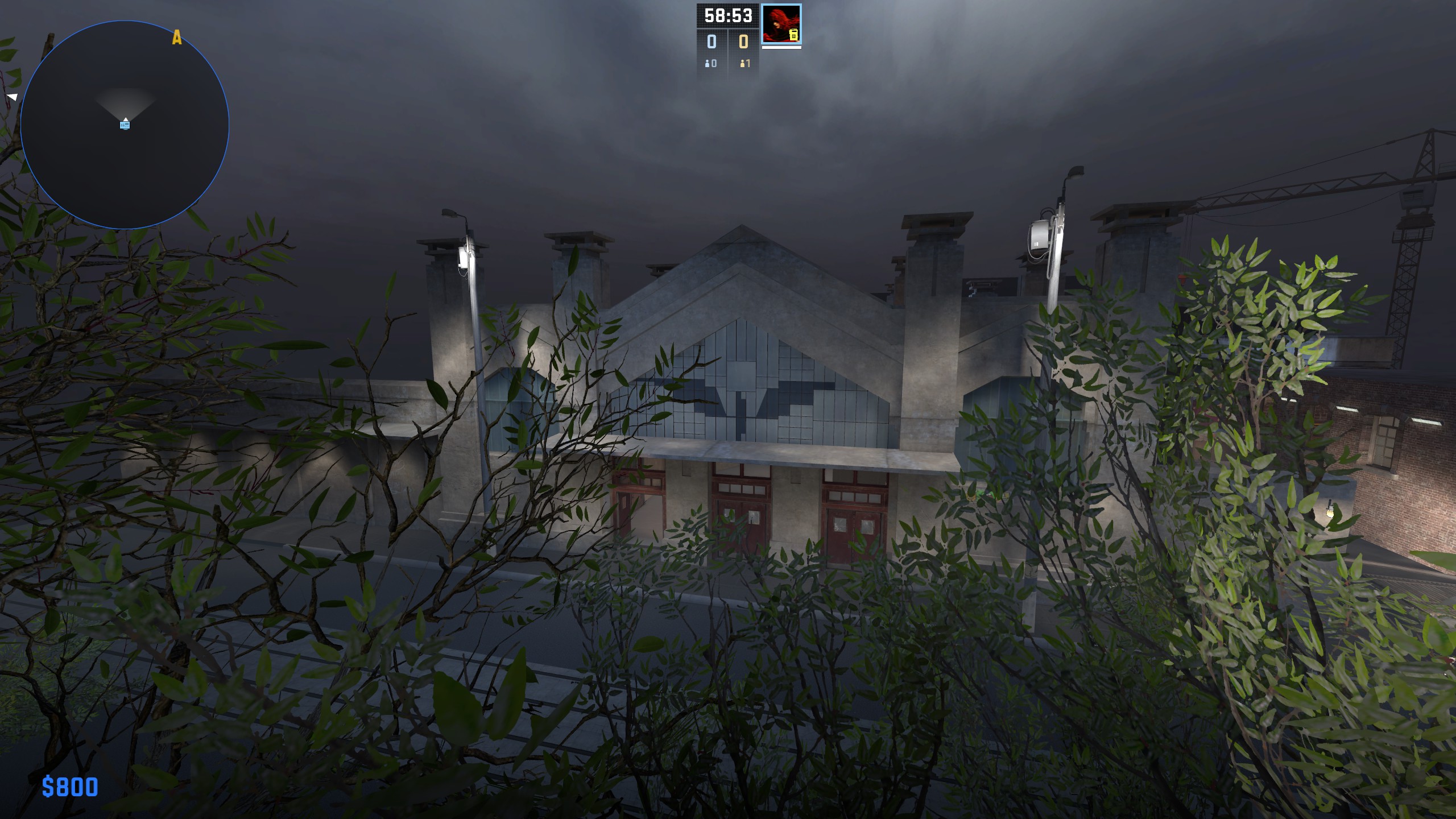
Ironveil - Designing a CS2 Wingman Battlefield
Ironveil is a Counter-Strike 2 Wingman map I built from scratch: one bombsite, two players per side, and the ambition to fit the tactical depth of a full 5v5 map into rounds that last about ninety seconds. The setting is a derelict Eastern European railyard, and I owned the whole pipeline, from paper sketches through graybox iterations to playtesting. I treated the project as a study in compression. Every principle I knew from classic CS level design had to survive being cut in half, and the most satisfying part was watching real strategies emerge on a map this small, the kind of set plays you'd expect from a full competitive map.
Layout & Multi-Path Flow
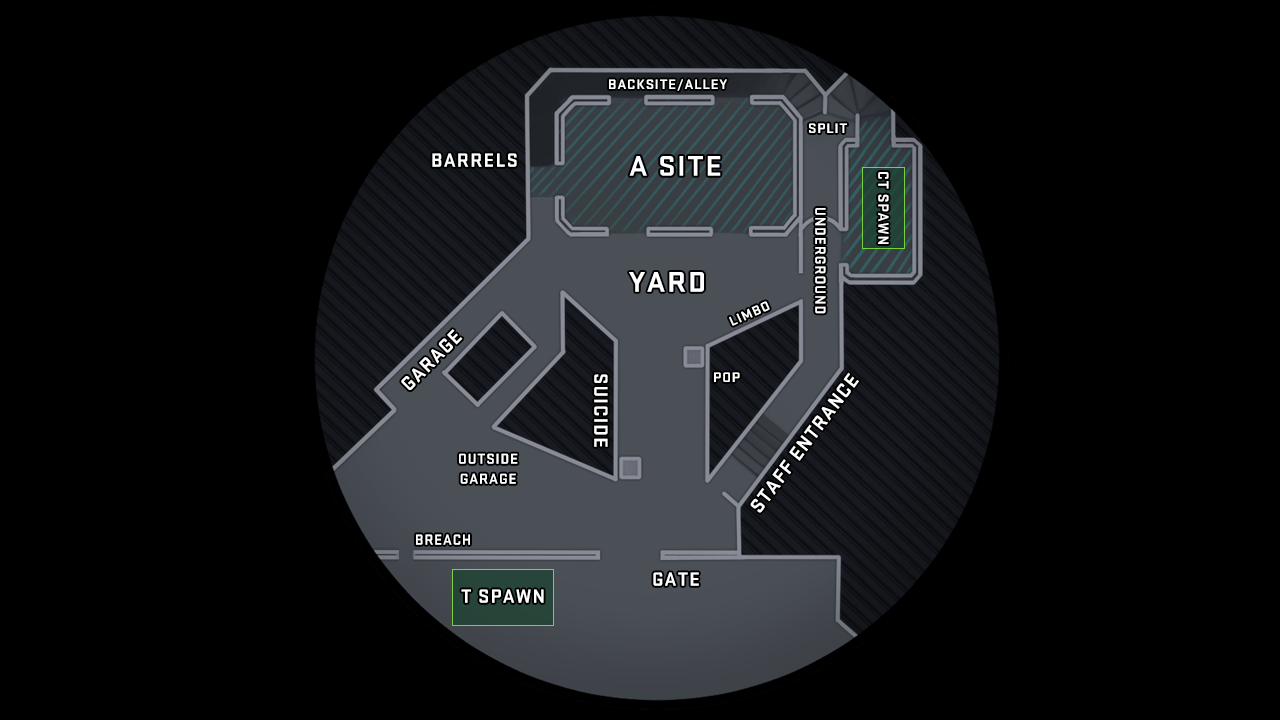
The core goal was strategic choice despite the tiny team size. Ironveil gives the attackers three distinct lanes into a single bombsite, following the classic CS philosophy of two main routes plus one secondary. With only two defenders, no setup can lock every approach at once, so map control has to be negotiated round by round instead of established once and held.
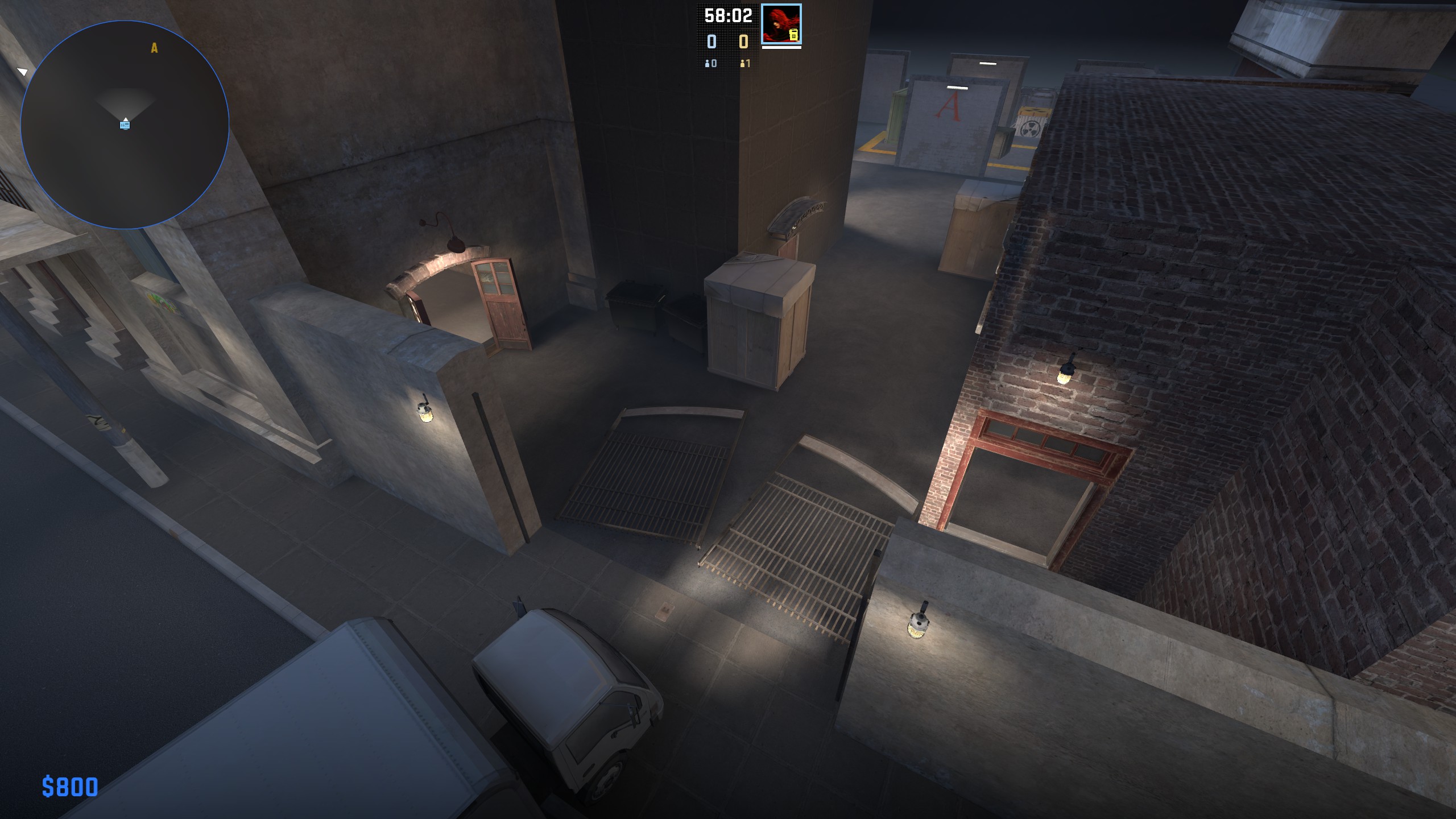
Garage (left lane) is the long contest, a service road along a railway gate in the spirit of Inferno's Banana. Scattered cover, crates, a broken gate, a fight for every meter. Defenders tend to spend early utility here to slow a push, and that pressure is the lane's real function: in Wingman you get two players' worth of grenades, and a smoke burned on Garage is a smoke missing from the retake.
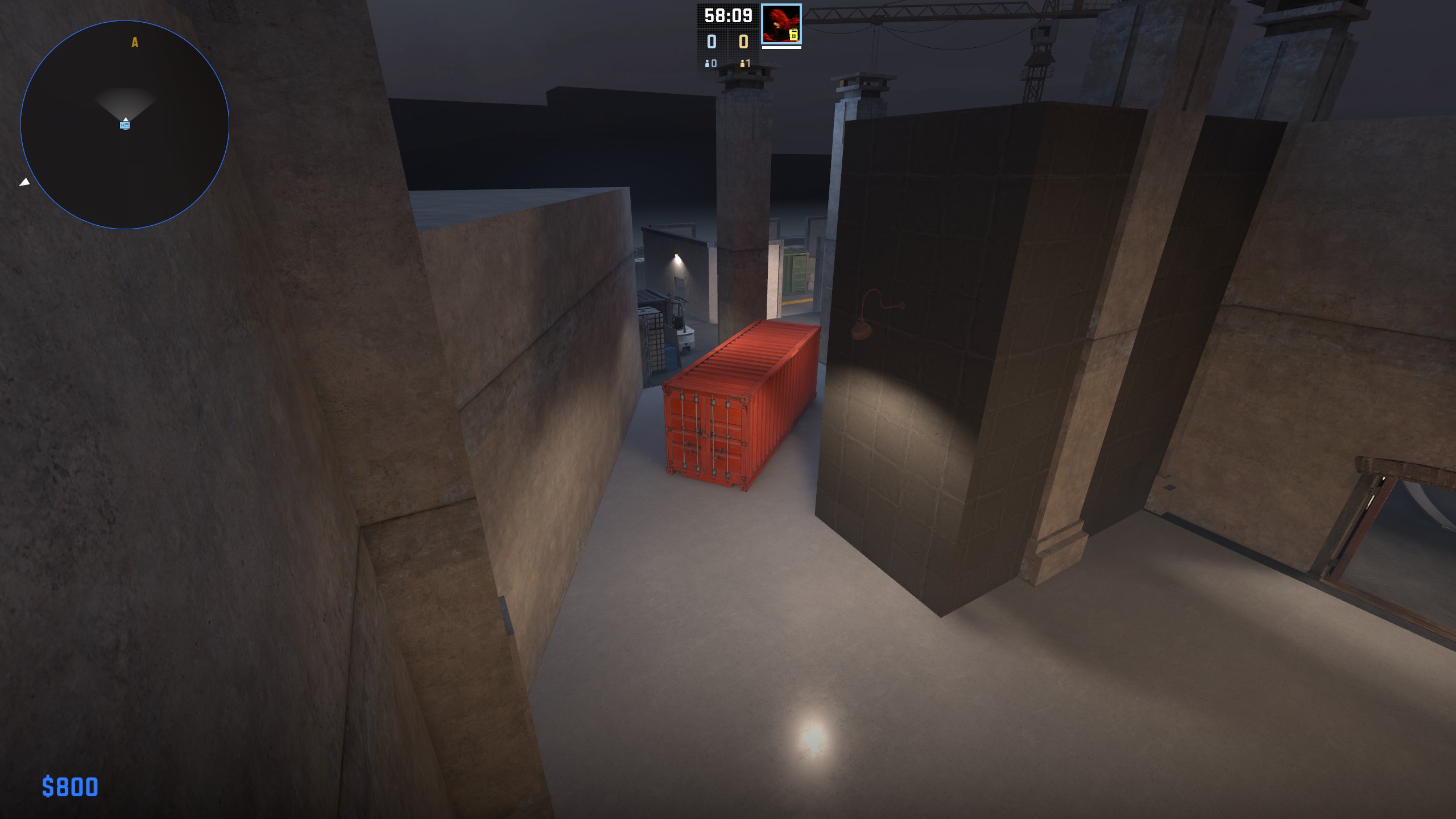
"Suicide" (center path) is the tempo lane, named with the same optimism as the Dust2 mid drop that inspired it. It dumps attackers into the yard in seconds, exposed to crossfire from multiple defender angles, so I designed it as a gambit: commit utility, or take the name at face value. Playtests surfaced a use I hadn't planned for. Teams avoided it at the buzzer, then crept through it mid-round to pinch the site from a second angle, quietly converting my rush lane into a flanking route. I kept it. When players find a better use for your geometry than you did, the geometry is working.
Staff (right lane) is the slow flank, an indoor corridor through the old staff building that exits behind the site, built on the close-quarters logic of Mirage's apartments. It rewards patience and punishes noise. A single defender with good timing can hold it with a peek or a molotov, but a methodical pair clearing it corner by corner comes out exactly where defenders least want them. Its slowness is the trade-off that makes the faster lanes readable: three routes, three speeds, three risk profiles.
All three lanes drain into an open yard around the bombsite, and dressing it was an exercise in angle economy. The cover, parked forklifts, concrete barriers, rail cargo, owes an obvious debt to Train's yards, but with four players in the whole server I had a hard budget for hiding spots and none to spare for 90-degree surprises. Every prop had to justify itself three times over: as cover, as a callout anchor, and as a piece of the setting. Anything that only decorated got cut.
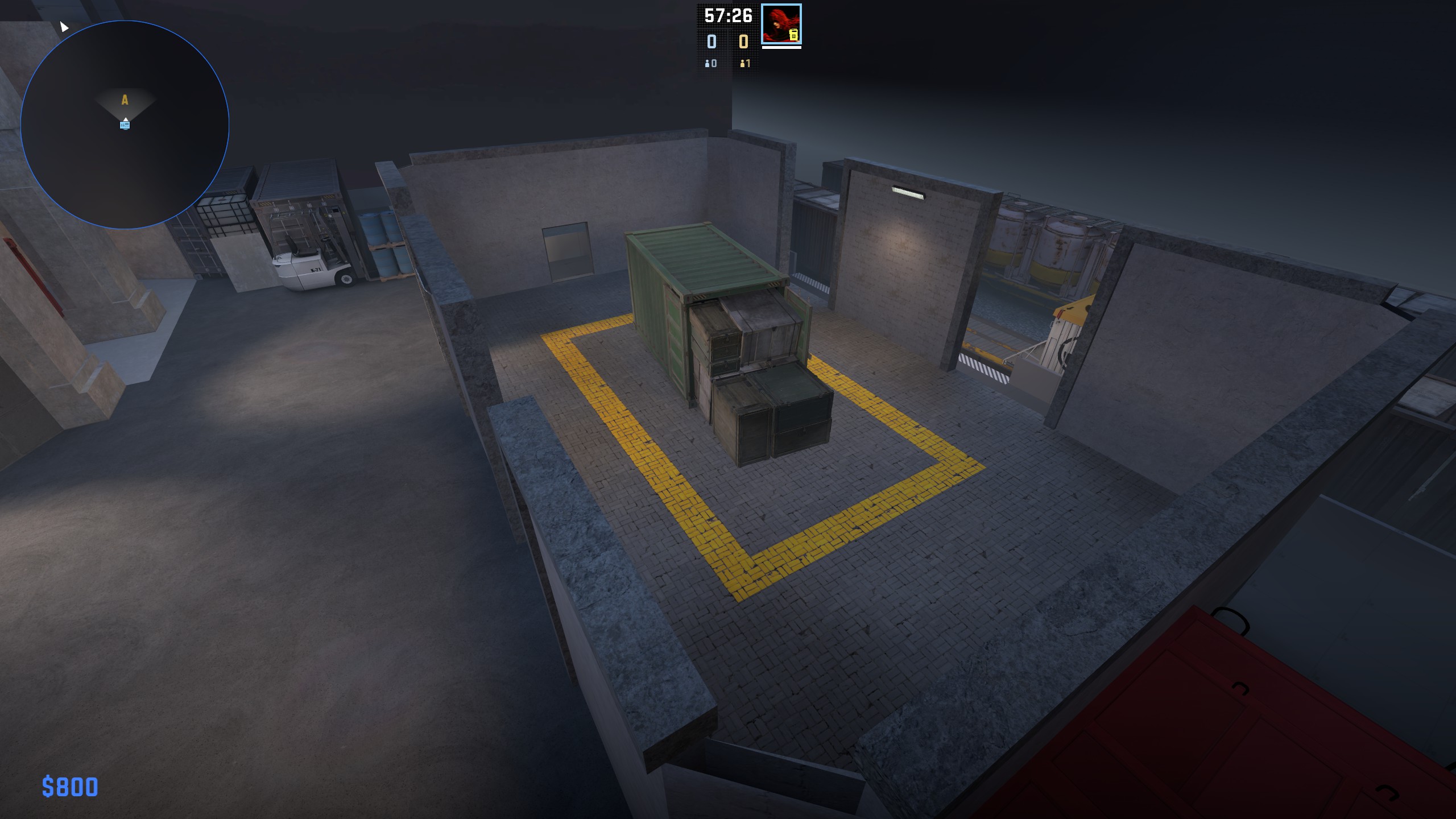
Tactical Gameplay in Microcosm
Designing for 2v2 forced me to distill combat design to its essentials, and it produced the discovery that shaped most of my tuning: Wingman has no trades. In 5v5, an entry death is a transaction; a teammate refrags and the round goes on. In 2v2, losing one player halves your team, your utility pool, and your information network in a single instant, so the risk calculus of every peek changes. Once I saw that, I reworked several sightlines to reduce coin-flip duels: fewer 50/50 angles, more encounters a player can approach with a plan.
Defense on Ironveil runs on information and rotation. A CT who spots enemies in Garage learns to delay and call rather than attempt a hero play, and testing bore this out: pairs who communicated ("I'll smoke Garage and fall back, you rotate behind site") won far more rounds, which is exactly the behavior the layout was built to reward. The open yard punishes anyone caught out of position, so late-round rotations and disciplined utility decide most of the close rounds.
Attackers, meanwhile, get to be creative with just two people. Early playtests produced a small taxonomy of tactics:
- Coordinated rushes: both Ts hitting the same lane, where a double Garage rush behind a good flashbang can simply overwhelm a lone defender. A rush has to be a credible threat for a defense to stay honest, and the CT setups have to price it in.
- Splits: one T making noise in Garage while the other lurks through Staff, forcing the defenders to divide their attention. The lurker's timing is everything; a few seconds early and the pinch collapses into two 1v1s.
- Slow plays: a loud, explosive Staff take early, then a late rotation through Suicide to squeeze the site defenders from two angles at once.
The signal that the map had enough depth came fast. After a handful of rounds, teams were calling strats, "fake Garage, hit through Suicide," treating a student proof-of-concept like it had a meta. Once players start naming your plays for you, the tactical depth question answers itself.
Environment Design & Clarity
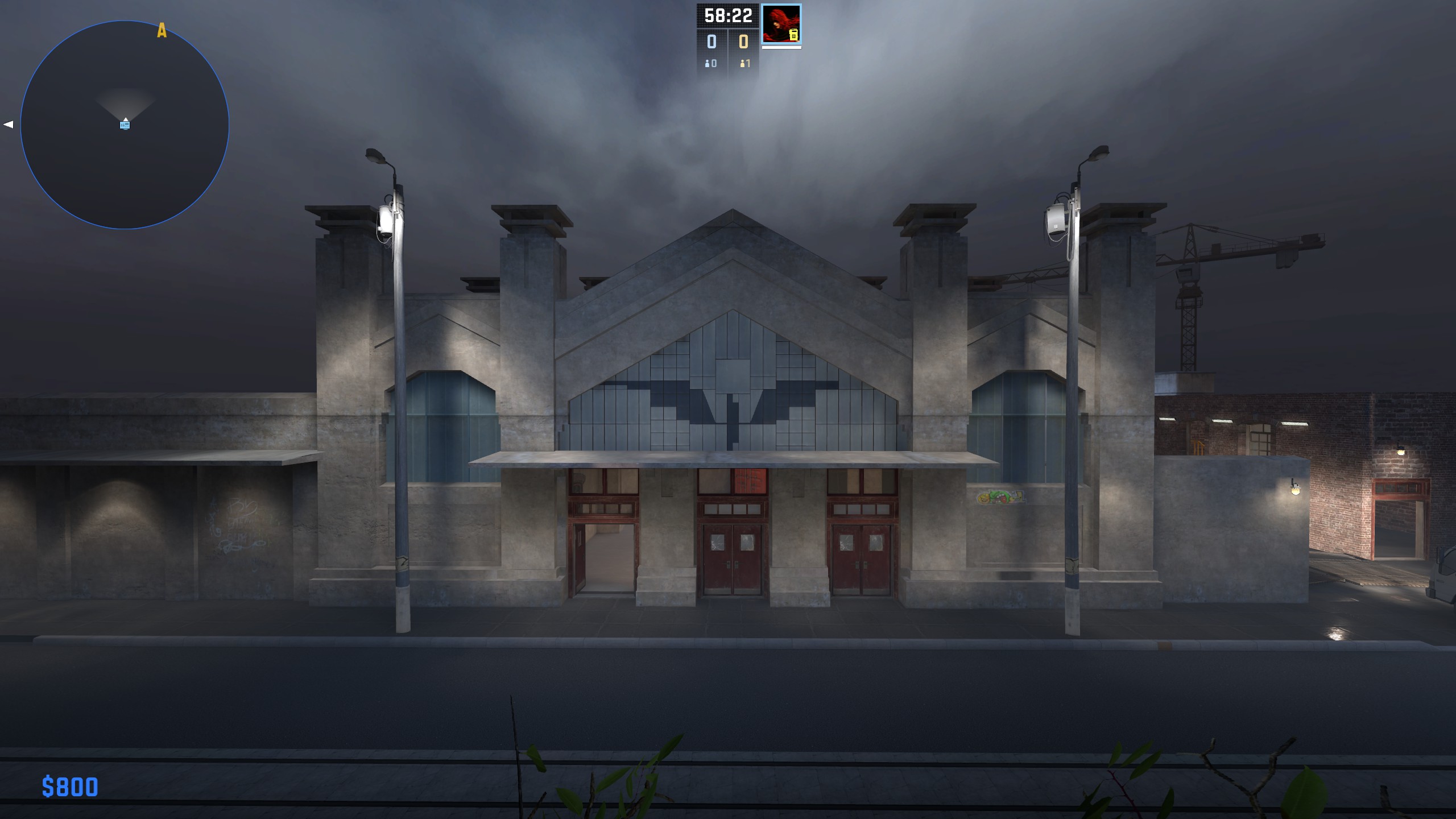
I wanted Ironveil to have a strong sense of place: a Romanian communist-era train depot repurposed as a clandestine battleground. I doubled as the environment artist, which meant every atmospheric choice had to answer to readability first. Weathered brick, idle locomotives, graffiti on every wall, an overcast sky that keeps threatening rain, all of it tuned so value contrast still separates a player silhouette from the surface behind it.
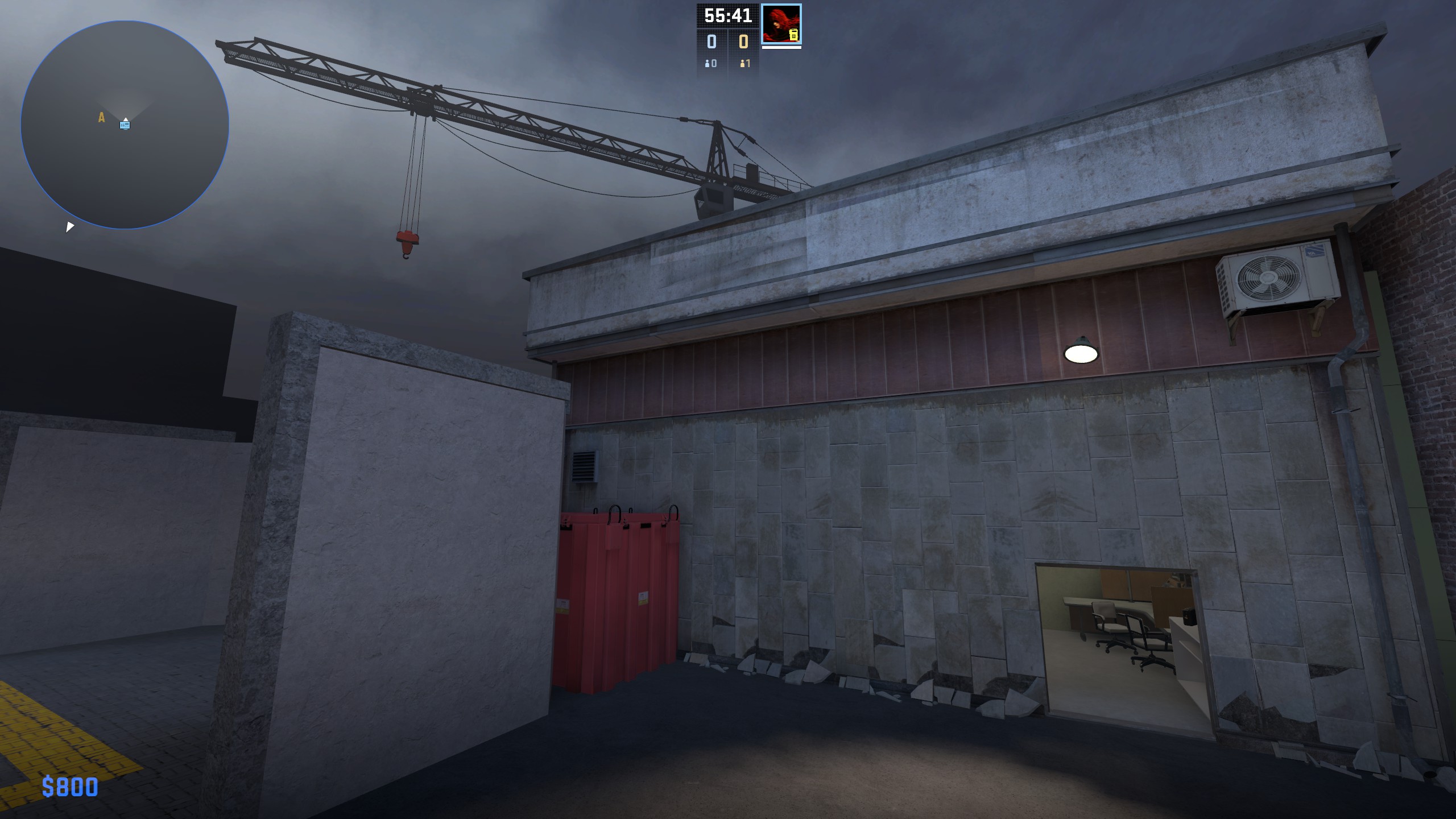
The aesthetic debt to Train, one of my favorite maps in the game, is deliberate and unapologetic. What I took from it wasn't the props so much as the discipline: a yard can be full of character as long as every object also serves the fight.
The playtest comment I keep coming back to: "It feels like a real place, but I always know where I could be shot from." That sentence is the entire job description of environment art in a competitive shooter, and hearing it unprompted was the best review the map got.
Iteration & Playtesting
No layout survives first contact with players. I ran 2v2 sessions with friends and, when humans were in short supply, an embarrassing number of bot matches, which turned out to be a better stress test than I'd like to admit. Bots have no fear and no map sense, so they wander into geometry problems that polite human testers instinctively avoid. The Suicide findings above came out of these sessions, along with the discovery that the route felt like a death trap at round start, which pushed me to reframe it as a mid-round tool rather than force it into an opening it didn't want.
Feedback also drove the unglamorous fixes. Testers snagged on sharp map geometry, so I clipped it. A few sightlines turned the map into a shooting gallery for AWPs and SSGs, so I trimmed engagement distances with occluding props until rifles and snipers had to negotiate.
Ironveil isn't finished, and I'm fine saying so. The bar I'm iterating toward is a map that could pass for an official Wingman pick: balanced, readable, and fun enough that nobody stops to ask whether a student made it.
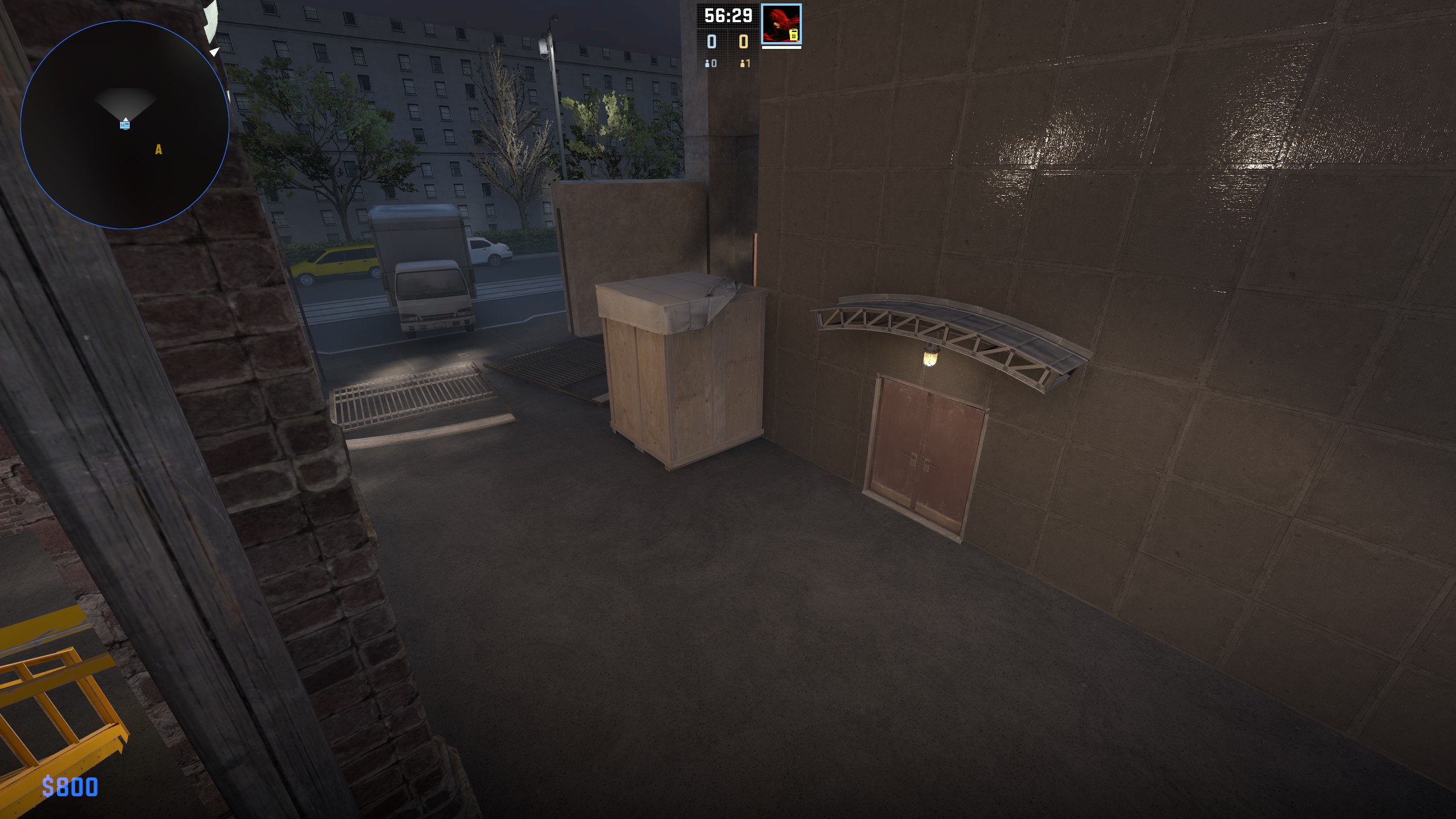
Conclusion & Reflections as a Level Designer
Ironveil was a crash course in owning a level end to end. I had to be architect, storyteller, and QA department, sometimes all in the same afternoon.
The Wingman format turned out to be the best teacher I could have picked. A 2v2 map has nowhere to hide: every corner gets peeked, every angle gets abused, and every layout mistake shows up in the very next round. Working at that scale sharpened my sense of competitive balance more than a full-size map ever could have, because the map was small enough for me to actually hear everything it was telling me.